




Tag: King Tupou VI

  • Continuity, Crisis and the Process of Political Consolidation in Tonga.

    Continuity, Crisis and the Process of Political Consolidation in Tonga.

    Continuity, Crisis and the Process of Political Consolidation in Tonga.

    Weekly Analysis – By Paul G. Buchanan.

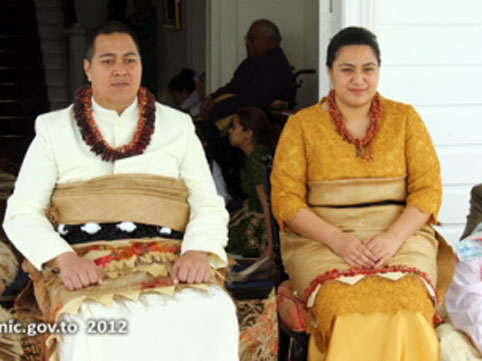
    The Bride and Groom: HRH Crown Prince Tupouto’a ‘Ulukalala and the Honourable Sinaitakala Tu’imatamoana ‘i Fanakavakilangi Fakafanua. Image courtesy of the Government of Tonga.

    This week the Tongan Crown Prince Tupouto’a Ulukalala is marrying his cousin. Although there is concern about potential inbreeding, the wedding demonstrates commitment to the royal lineage on the part of recently installed King Tupou VI. The nuptials reaffirm the role of nobility in Tongan society and a commitment to perpetuating the genetic core of it. The intent is to demonstrate continuity, certainty and stability within the institutional backbone of Tongan life. As a sign of royal connection to everyday Tongans (commoners), the celebrations have been muted (in part because it follows on the official mourning period for the late King Tupou V) and the royal family are paying for them rather than having the government fund the exercise as per past tradition.The Tongan royalty, however, are symbols of tradition and the historical past.

    As 36th Parallel Assessments has argued in previous analyses, the political liberalization process begun by King Tupou V is, if not irreversible, already seen in a number of areas, including the professionalization of the military and the holding of the first open and transparent elections for parliament in November 2010. These elections, known as “foundational elections” in the comparative politics nomenclature, were the first step in the effective extension of the franchise to commoners.

    Tongan Parliament Chamber.

    The royal wedding has delayed an equally if not more important event in Tongan politics that may well be the second step in the democratization process: the vote of no confidence in the first freely elected government in Tongan history. The vote, which is anticipated to be held in two weeks, was precipitated by the June 27 resignations of three cabinet ministers (Police, Health and Labour) on the back of allegations of financial impropriety and incompetence against the Prime Minister, Lord Tu’Ivakano and other ministers and high ranking government staff.  It occurs at the halfway point of the parliamentary term, against a backdrop of prolonged economic stagnation most evident in a thirty percent drop in foreign remittances (a major source of hard currency revenue and 40 percent of GDP), a decline in exports to near zero and the growth in sovereign debt to US$174 million in the last four years, something that has increased unemployment and an exodus of labor to foreign shores. Business development and investment are at a standstill, with GDP growth forecast for 1.5 percent for FY 2011/2012 (most of this due to growth in tourism, donor aid and concessional loans).

    Politically there have been a number of conflicts between the parliamentary opposition and the government over issues such as the relationship of the executive and the judiciary. Prime Minister Tu’ lvakano has been accused of trying to “Fijianize” the Tongan courts by replacing independent jurists with government appointed officers while making the courts responsible to the government in the first instance. Given the unhappy state of relations between Fiji and Tonga, such accusations of judicial interference find resonance in Tongan public opinion.

    Underlying this is a pervasive sense, shared by many commoners, of endemic corruption in high places. This was reaffirmed by investigations into the 2009 MV Princess Ashika sinking, where the inter-island ferry was lost along with 74 passengers while on its first domestic carriage after being pronounced seaworthy by Tongan authorities in spite of substantial evidence to the contrary. Evidence that Tongan officials ignored serious warnings about the state of the vessel amid rapid and non-transparent financial transactions between the seller of the ferry and Tongan government-controlled buyer reinforced public perceptions that the public interest was not foremost in the minds of many public officials.

    Regardless of the proximate causes of the no-confidence motion, the underlying reason for the parliamentary crisis stems from the long-standing tensions between nobles and commoners in Tongan society, something that is reflected in the composition and dynamics of the 38-member Tongan parliament.  Serving three-year terms, seventeen commoner members are elected in multi-seat constituencies (ten seats for Tongatapu, three for Vava’u, two for Ha’apai and one each for Niuas and ’Eua), nine are elected by 33 hereditary nobles and ten are appointed by the Privy Council (which is the executive branch and includes non-elected members).  As with (Western) Samoa, nobles hold a disproportionate number of parliamentary seats relative to their numbers (albeit at much lower numbers than in Samoa), which along with non-elected members and support from independents has seen the first democratic government dominated by noble interests. The erosion of trust and confidence in Lord Tu’Ivakano and the Parliamentary Speaker Havea Hikule’o (Lord Lasike, who was recently convicted of possession of ammunition, which could see him lose his seat in the assembly) has accentuated the divide between the few and the many, something that is now being exploited by the commoner parliamentary opposition bloc under Westminster-style rules.

    Members of the Tongan Parliament (2011).

    Much like Samoa, the role of expatriates in Tongan political life cannot be discounted. More than half of the Tongans alive today reside overseas. Most are commoners and many are second and third generation immigrants, whose ties to the motherland, to include knowledge of village life and loyalty to nobility, are more tenuous than that of their progenitors. The majority of the expatriate community lives in Australia, the US, New Zealand, Canada and Japan, and virtually every resident of the islands has relatives abroad. This is notable because all of the preferred destination countries are mature democracies, and for many of those raised and educated in them, notions of representation, government and civic duty differ markedly from Tongan tradition. This has an impact not only on remittances (since younger, foreign-born expatriates tend to remit less back to the homeland) but also on political attitudes as they are imparted and shared by expatriates with the resident population. For many Tongans, genuine majority rule, as manifest in the presence of commoners at the head of government, is now a clear preference even though they continue to respect royal traditions.

    The no-confidence vote is being pushed by ten commoner members of parliament led by former broadcaster, activist and now opposition leader Akilisi Pohiva of the Friendly Island Democratic Party (Democratic Party, which has 12 members in parliament), and has the support of the three former cabinet ministers (two of whom are from his party) and some independents who will be the deciding factor as to whether the motion passes (the motion has been delayed 14 days from July 2 to allow the government to consider its response).

    Media attention has focused on arguments about whether non-elected parliamentarians are allowed to vote on the motion, on whether the Speaker can vote twice (as a noble and as Speaker in the event of a deadlock), on personality conflicts and shifting alliances between parliamentarians, on whether there should be public consultations about the vote and whether holding the vote will prevent a national budget from being passed (since the FY 2012/13 budget is up for parliamentary ratification). Current projections show a very even split between those in favor and those against the motion, but there are undeclared members yet to decide which way they will vote. Invoking memories of the 2006 Nukualofa riots, government officials such as Justice Minister Clive Edwards have warned of possible violence should the motion be passed (Mr. Edwards claims that he will move to New Zealand if that happens). In response, Mr. Pohiva and his supporters claim that the majority of voters want a commoner led government because nobles are out of touch with the everyday realities of Tongan life, something evident in their lifestyles and approach to governance. Motion supporters also say that there will be no violence instigated on their behalf.

    There is a larger issue at play, and that is the process of Tongan democratization itself. The transition from authoritarian (in this case monarchical) to democratic rule passes through several phases. In the case of top-down transitions such as this one, where the authoritarian hierarchy devolves power to popularly elected representatives, the process of political liberalization is marked by two significant political events. The first is the foundational election, which is the first free and fair election that installs a representative government after a period of authoritarian rule. The second is the “consolidation” election, where power is rotated from the original government to a (former) opposition.

    The importance of the foundational election is that it marks the formal transition from non-elected or non-freely elected to freely elected government. The importance of the consolidation election—which can take years to eventuate, such as in the case of Chile–is that it tests the commitment of all political actors to the democratic principles of competitive leadership selection. The foundational government accepts losing in return for a chance to compete again on a pre-determined date. The winning (former) opposition agrees to treat the losers as a loyal opposition, with all the respect and privileges accorded to that status. The test resides in the acceptance of both parties of the outcome of an election in which the government loses or, in this case, loses a no-confidence motion that has the potential to replace it with a government made up of a majority of commoner opposition members.

    Coming halfway through the first term of a foundational government, the no-confidence motion is a clear sign of instability. But this was to be expected given that the Opposition won a clear majority in the foundational election and provided several cabinet ministers to the Tu’lvakana government. Once those ministers withdrew from cabinet government legitimacy was open to question.

    In view of this, the current political moment in Tonga can be seen in a positive rather than a negative light. More than a political crisis, it represents a window of opportunity for Tonga to deepen its democratization process beyond the foundational moment, and to satisfy the desire of the Tongan majority for a government of their peers. In that sense it is the other side of the coin with regards to the royal wedding. Whereas the latter represents the continuity of tradition, the former represents the promise of a maturing democratic future. Barring an authoritarian regression on the part of the government or intervention by King Tupou VI, that future could begin now.

    Of course, there is always the possibility of an authoritarian regression. The process of democratization is not linear or fully assured until generations have been inculcated with the political values underpinning it. However, be it done by royal fiat or by executive order on the part of the Prime Minister, an authoritarian intervention against the no-confidence vote will cause more problems than it will solve. The no-confidence motion was made according to constitutional conventional and parliamentary procedure, so the judiciary would have to abandon all pretenses of independence and impartiality in order to support it. The military and police, who swear loyalty to the King and are constitutionally defined as defenders of the Tongan nation, could be divided by an order to support the authoritarian move, particularly in the absence of mass violence. Both services have worked hard to professionalize in recent years (the Tongan Defense Forces by focusing on participation in multilateral international security missions), and the Police continue to have strong links with external counterparts, particularly the New Zealand Police, that advocate a non-political role for the constabulary. Thus any extra-parliamentary attempt to thwart the no-confidence vote could cause factionalization within the security forces.

    Pro-democratic foreign governments, including most of Tonga’s major aid donors and diplomatic partners, would react adversely to such a move. The same would likely occur on the part of regional organizations such as the Pacific Island Forum, Secretariat of the Pacific Community and, further afield, the European Union. Similarly, a move away from democracy could result in sanctions or suspensions on the part of international organizations such as the Asian Development Bank.

    Popular reaction to an authoritarian intervention is likely to be hostile, which increases the possibility of unrest and instability. Given the precarious national economic condition, this could further deter investment, deepen unemployment and lead to bankruptcies. Added to potential losses in foreign aid from pro-democratic donor nations, the backlash could spell disaster for the authoritarian usurpers.

    The likelihood of these negative reactions, should they occur in whole or in part, provides a powerful disincentive for extra-parliamentary obstruction of the no-confidence vote. This does not mean that it could not happen, but that the chances of an authoritarian intervention are reasonably low given the balance of costs and benefits.

    The Lord Tu’lvakano government may survive the vote of no confidence. If it does it will have been placed on notice that it must improve its performance in order to successfully compete in elections scheduled 18 months from now.

    The question remains, should they be allowed to form a government after a successful no-confidence vote, whether Mr. Pohiva and his supporters will adhere to the implicit rules of the consolidation “game” and deliver on their promises of improving governance and the economic and social prospects of the Tongan people. The closeness of the vote will determine the extent of the mandate of the winners, which in turn will determine the possibilities for genuine and lasting reform. The answer to all of these issues will be written in the weeks and months ahead.

    Futures Forecast:The no confidence vote will proceed and the current government will fall. Mr. Pohiva will become the next Prime Minister and will form a “popular” government with a commoner majority in the Privy Council. Both markets and diplomatic partners will react favorably to the institutionalized transfer of power as part of the ongoing democratization process.
    Stability Score: 6 (1=low and 10=high). For reasons intrinsic as well as extrinsic to parliament, the Tongan political system remains relatively stable and widely supported in its consolidation phase. Testing economic conditions remain a large determinant of this medium level score, with improvements or deterioration in material life likely to impact on political and social stability in the period leading to the November 2013 national parliamentary elections.
  • 36th-Parallel Regional News Round-Up – March 30 2012

    36th-Parallel Regional News Round-Up – March 30 2012

    36th-Parallel Regional News Round-Up – March 30 2012

    36th Parallel Assessments

    [RSSjb feed=”feed://36th-parallel.com/feed/” num=”5″ pubdate=”true” excerpt=”false” charex=”250″ list=”ul” target=”_blank” pubauthor=”false”]

    Video Interview: 36th Parallel’s political analyst Selwyn Manning is interviewed by Glenn Williams on why New Zealand’s Minister of Foreign Affairs, Murray McCully, is seemingly failing to govern his ministry and failing to provide it leadership through a reform and restructuring phase. Click here to listen.

    Fiji, Suva: (Radio Australia Pacific Beat/Pacific Media Watch): A Papua New Guinea government official has been called arrogant and ignorant after claiming at the Pacific Media summit that it’s not the media’s role to challenge governments. Paulius Korini, deputy secretary of PNG’s department of information and communications, told Pacific Beat on Tuesday that rather than challenge governments the media should work in partnership with governments. Mr Korini called for more responsible reporting by journalists. Tongan delegate at the summit in Fiji, Kalafi Moala, says he’s spoken to several other delegates who have seen the transcript of the interview, and they are as angry about it as he is. See, Pacific Media Centre Report.

    Fiji: A health expert has told media personnel climate change is also a health issue and the media can help identify and solve climate-related problems. Dr Josaia Samuela, from the Public Health Division of the Secretariat of the Pacific Community, said people need to make the link, because basic needs such as food and water are directly dependent on climate: “The physical environment and non-human species are the primary victims of climate change, while the human impacts of climate change are distant, experienced somewhere else, and at some time in the future,” he said. See, Pacific Scoop Report.

    China/Fiji/Melanesia: China said Thursday that the Melanesian Spearhead Group (MSG) played an important role in promoting stability and development in the Pacific region. Addressing the opening session of the two-day special MSG Leaders Summit in Fiji’s capital Suva, Chinese Ambassador Huang Yong said “We (China) believe that MSG will make greater achievements and contribute to the stability and development in the region together with other regional and sub – regional organisations,” Yong said. “China is glad to note that in the past two week, the MSG meetings have been progressing well on the many areas that were discussed.” See, PINA Report.

    Fiji/Melanesia: Fiji’s Prime Minister Commodore Frank Bainimarama has handed over land leases to representatives of Melanesian countries to build chanceries. The first three leases were given to the governments of Solomon Islands, Papua New Guinea and Vanuatu yesterday. Commodore Bainimarama said there was also land allocated to the Frontier de Liberation Nationale Kanak Socialite of New Caledonia. He said the land leases re-affirmed Fiji’s commitment towards strengthening the Melanesian Spearhead Group (MSG). See, PINA Report.

    Tonga: Tonga’s democracy warhorse, ‘Akilisi Pohiva, is to push a private member’s bill in Parliament to bring in a full representative voting system, firing a broadside at the sitting Prime Minister for failing to take action on anti-corruption measures. Pohiva, 70, leader of the Democratic Party, has been campaigning for reform for more than 30 years. At the last election, under the country’s new constitution, the nobles elected nine MPs and the population elected 17, 12 of whom were from Pohiva’s party. But the former broadcaster and newspaper owner was blindsided by the other five crossing the floor to support the nobles, ensuring that an aristocrat, Lord Tu’ivakano, became Prime Minister. See, PINA Report.

    Papua New Guinea: Prime Minister Peter O’Neill last night called on investors to show genuine commitment as PNG’s development partners, The National reports. He was at the launch of Oil Search Ltd’s multi-million kina Oil Search Health Foundation at the Gateway Hotel in Port Moresby. The foundation will employ more than 80 people, a budget of more than A$24 million (K48 million) in its first year of operations and work in nine provinces of PNG. The project represents a long-term commitment by Oil Search to make a positive difference to society. See, Malum Nalu Report.

  • Weekly Analysis Video: Tonga’s New King Tupou VI + NZ’s Policy Shift Over Iran

    Weekly Analysis Video: Tonga’s New King Tupou VI + NZ’s Policy Shift Over Iran

    Weekly Analysis Video: Tonga’s New King Tupou VI + NZ’s Policy Shift Over Iran

    Dr Paul Buchanan introduces the featured analysis items on 36th-Parallel.com for the week, including Tonga’s Reform Timeline Ensures A Return To The Past Is Impossible, Nuclear Iran: New Zealand’s Police Silence Is A Foreign Policy Shift, and Proclamation of Tonga’s New King A Milestone Along Authoritarian Democratic Transition Line.

  • Weekly Analysis: Tonga’s Reform Timeline Ensures A Return To The Past Is Impossible

    Weekly Analysis: Tonga’s Reform Timeline Ensures A Return To The Past Is Impossible

    Weekly Analysis: Tonga’s Reform Timeline Ensures A Return To The Past Is Impossible

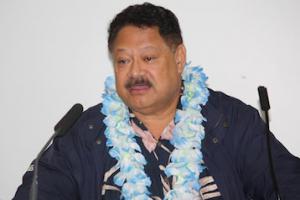
    Tonga’s transition from an authoritarian Monarchy-led and appointed government toward a Polynesian-style democracy received a blow of uncertainty with the death of the Late King George Tupou V. Even so, this is unlikely to cause Tonga to return to a state where its King rules all. Despite the newly appointed King Tupou VI (pictured right) being more conservative than his brother the late King Tupou V, and despite his having failed as prime minister from 2000 to 2006, Tupou VI is expected to respect the progress Tonga has made since the death of his father, the Late King Taufa’ahau Tupou IV in September 2006.

    It is clear that both culturally, and politically, Tonga has established a momentum that would cause significant unrest should its transition toward a more substantive democracy be arrested.

    The most significant legacy left by the Late Tupou V is the legislative electoral framework that he helped create to balance the conservative elements of Tonga’s privileged class against the progression of commoners’ rights as expressed within the constraints of the democratic process.

    The Late Tupou V (pictured right) was an interesting Monarch. He enjoyed a “retro” elite lifestyle expressed through a cultured old English accent, Georgian in inflection as his English name would suggest. As a young Crown Prince he sculptured his identity on the fine ways of English Monarchistic traditions, enjoying fine classical music, fine living, fine food and conviviality. His outer expressions of tradition – the style of dress, his embrace of ceremony, his black London cab – were symbols peculiar to a bachelor King who enjoyed the privilege of his title. It was known he was sick prior to becoming King, and was generally known over the past six months that he was suffering from Cancer and chronic gout.

    While contemporary opinion suggested King Tupou V was disinterested in Tongan affairs, Tongan Government insiders say this was not true, that he followed local politics avidly, pushed for cultural reform, refused unreasonable gift giving from villagers, and, with his coronation, cut long traditional Tongan ceremonies to half the time.

    King Tupou V’s father, King Taufa’ahau Tupou IV paved the way for reform when allowing a commoner, Fred Sevele, to be appointed prime minister. Sevele replaced Crown Prince Tupouto’a Lavaka as prime minister after his government defaulted on state service wages.

    Tonga had been struggling to hold its economic position. In 2006, New Zealand Foreign Affairs and Trade reports noted Tonga’s GDP stood at T$361 million (US$209.91 million, March 2012 conversion rate), with GDP per capita totaling T$2936 (US$1707.21, March 2012 conversion rate) and  GDP growth at 1.6%. In 2005 it exported US$13.9 million and imported US$82.9 million. Its main exports were fish, squash and vanilla, with main imports consisting of processed food, animals, beverages and tobacco.

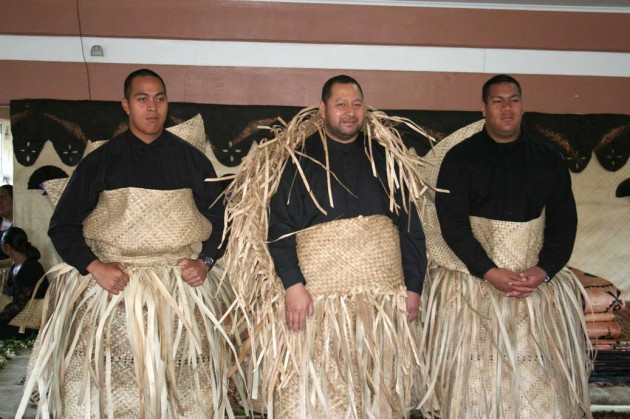
    By the end of the 2005 fiscal year Tonga was heading towards bankruptcy. After six years as prime minister, the Late King Taufa’ahau Tupou IV’s son Crown Prince Tupouto’a Lavaka (Pictured centre) had lost the respect of the nation’s Nobility and business community and arguably lost Tonga millions of dollars through poor governance decisions. Under his father King Taufa’ahau Tupou IV’s gaze, the Crown Prince resigned his prime minsitership and Fred Sevele became the first commoner to be appointed prime minister.

    Enjoying the confidence of the Nobility, Sevele nudged constitutional reform toward a more meritocratic form of Government. He committed to encourage a culture be embraced where people secured work and positions based on their ability rather than their status or position of privilege. But Sevele’s appointment to the prime ministership did not resolve dissent that was rising among those who sought more rapid constitutional reform than what the Monarch and the Nobility were prepared to allow. In 2006, Tonga’s political system was still officially defined by New Zealand and Australia’s foreign affairs bodies as a constitutional monarchy but a system where the King appointed the Cabinet.

    [pullquote]

    36th Parallel Analysis – By Paul Buchanan: Proclamation Of Tonga’s New King Tupou VI A Milestone Along Authoritarian-Democratic Transition Line – The death of the Tongan King George Tupou V represents a rare moment in politics. Not only does it mark another example of dynastic succession (of the monarchical variety). It also represents another step in the gradual transition in Tonga from an absolute monarchy to a democratic regime. ( Click here to view this analysis post.)

    [/pullquote]The Nobility appeared satisfied that the status quo would suffice when in March 2005, the late Taufa’ahau Tupou IV permitted four additional ministers to be appointed from within the legislature. The four included two people’s representatives and two nobles’ representatives. The Tongan Legislative Assembly comprised of a cabinet of 16 ministers, with nine noble representatives chosen by 33 noble families, and nine representatives elected by universal suffrage by Tongans 21 years of age and over.

    On The Brink Of Change:

    After King Taufa’ahau Tupou IV’s funeral in September 2006, then prime minister of New Zealand, Helen Clark, spoke to media in the gardens of the New Zealand High Commission located on a hill near Nuku’alofa. As a Pacific-aligned senior stateperson, Helen Clark had long enjoyed the respect of her Polynesian counterparts. That evening, she noted that the year prior to Taufa’ahau Tupou IV’s death had been a difficult one for Tonga. Due to poor economic governance there was a widespread public service strike. Over 170 teachers had been made redundant after having their salaries cut and many went unpaid. Tonga’s class sizes were huge. And there was a young and proportionally large commoner population with expectations that Tonga’s strict hierarchical culture would relax its hold.

    She said 2005-06 had seen “enormous division in Tonga” but that under King Tupou V there was an “opportunity” for Tonga to move ahead and that under the prime ministership of Fred Sevele there was a will to advance reform. Correctly, Helen Clark noted that Tonga’s new King Tupou V would likely step back and allow democracy to develop. But the slow pace of reform was enough for many. Discontent went public and then spilled into the streets. By November 16 2006 Tongatapu’s Nuku’alofa was ablaze. That sad day became known as Black Thursday.

    That Thursday afternoon violence broke out after a large group of youths had gathered in a park adjacent to Nuku’alofa’s Parliament Buildings. Inside pro democracy politicians were negotiating a reform plan with Government ministers and officials. Common ground was not reached. Word spread amongst the gathering outside. Soon after agitation surfaced and groups of youths turned rebellious. People flocked into Nuku’alofa’s central business district. Buildings were torched. Three people became trapped inside a building and died in the flames. In total eight people perished. Others took to the outer streets extending up to the Chinatown Hotel. Threats were made that the Hotel would be destroyed. The proprietors urged the youth gang, including some known as The Deportees – a loosely named association of youth and men who had been deported back to Tonga from Australia, New Zealand and the United States – to take whatever they wished and pleaded that the four story hotel be spared. The establishment was looted and the Chinese owners fled. The Chinatown Hotel was set alight. By morning a dark plume of black smoke rose above Nuku’alofa. The Chinatown Hotel was just one of hundreds of buildings that met a similar fate that night when 80 percent of Nuku’alofa burnt to the ground. The sub-text in the riots was not just discontent with the slow pace of political reform, but deep seated animus towards the resident  ethnic Chinese community.

    Tonga’s establishment was shattered. It feared ongoing civil unrest would destroy Tonga. The Government sought help from Australia and New Zealand. By Friday evening Tonga’s international airport was secured by ANZAC soldiers and Tonga established a state of emergency. Nuku’alofa’s CBD became a crime scene. Road blocks secured most of Tongatapu Island, and Australian Federal Police forensic teams assisted Tonga Police to understand the method operandi deployed by arsonists during the riots. More than 700 people were arrested in connection with the riots. Most of the riot-related trials have concluded. Sedition charges against five pro-Democracy MPs were dismissed because of a lack of evidence. (NZMFAT)

    King Tupou V’s strength literally rose from the ashes. Recognizing constitutional and cultural reform must not just be hinted at but be seen to be occurring, he instructed his Government to embark on constitutional and electoral reform. He delivered a speech at the closing of Parliament in 2006 that articulated an expectation that Tonga would set in train a transitional roadmap toward democracy, but that the route would not disconnect Tonga from its traditions, its nobility or Monarchy and would embrace Tonga’s sense of oneness and national pride.

    On June 2 2011, King Tupou V delivered a significant address from the Throne. He opened with this guidance: “There is wide spread rejoicing in the Realm at the completion of the first stage of our new democratic reforms which we may credit to the legacy of the previous government and Parliament who, without a single voice of dissent, enacted these historic reforms. The essence of these reforms is that the power to propose and to enact future reforms is firmly vested in the parliament so that we might make small adjustments often as opposed to sudden changes of great magnitude after long periods of inactivity.”

    2010 And Beyond:

    Glenn Williams interviews Selwyn Manning on what Tonga can expect with the appointment of its new King Tupou VI. Does Tonga’s democratic reform timeline ensure a return to the past is impossible? What is the Late King George Tupou V’s legacy? What can we expect from the new King Tupou VI? What are the warnings that Black Thursday (the arson riots of Nuku’alofa, November 2006) send to Tonga’s conservatives? What is the Futures Forecast for Tonga?

    Tonga’s economic challenges continue, similarly with other nations in the Southwest Pacific. Tonga’s challenge is born from isolation while embracing broader definitions of globalization. It faces the challenge of meeting its energy needs amid realization that if Tonga is to meet its energy driven economic goals, controversial decisions must be made. King Tupou V’s preferred solution, as expressed to Parliament in 2010, was that Tonga must explore the feasibility of establishing new nuclear energy technologies as a solution to address Tonga’s energy needs. (Pacific Scoop) While reticent to publicly endorse the King’s speech, Tonga’s more independent ministers respectfully acknowledged the vision and in the true Tongan tradition of considered slow pace initially left the issue of Tonga’s strategic energy plan unclear. Tonga’s Energy Road Map – 2010 to 2020 was then developed scheduling progress points upon which Tonga can appraise its progress toward renewable energy goals. (Tonga Energy Roadmap)

    Tonga continues to explore opportunities where it can evolve, as King Tupou V stated: “from an impoverished country which missed out on most opportunities to improve its circumstances in the 20th Century to a prosperous one of the 21st Century.” Tonga is now better positioned constitutionally for non-royals to contest governance decisions, to debate the performance of its leaders, and to edge toward fully open and popular government. The issue of energy and the distribution of wealth accruing from foreign investment in non-traditional industries will be major yard marks of both political and economic progress.

    As prime minister between 2000 and 2006, the Crown Prince Tupouto’a Lavaka failed Tonga, but as its new King Tupou VI he inherits from his older brother a pathway forward where he will not need to burden himself directly with governance and policy decision making. That is the lot of a new independent legislature. King Tupou VI’s challenge is to represent the Tongan way, a Pacific island state unique in that it was never colonized but rather embraced a celebration of indigenous Kingly rule until a time when the aspirations of its common people arose to govern a partnership for the betterment of all.

    But if King Tupou VI is to earn the respect of all Tongans, he will need to understand the wants of his people. The first decision he made as the newly appointed King was to bring the date of his older brother King Tupou V’s funeral forward one day. The decision was seen as discourteous to the new Tongan way, at best ad hoc and lacking understanding of the pressures on Tongans and officials to meet the logistical requirements of an event of this magnitude. As businessman Melino Maka of the Auckland Tongan Advisory Council said on hearing the decision: “it shows a complete disregard for Tongans overseas who were already struggling to get to Tonga by Wednesday”.

    If the new King can learn from past mistakes, Tonga will progress as expected. Should he regress to pre Black Thursday ways, then another crisis, whether it be political or civil, will likely come to pass.

    36th Parallel Futures Forecast: Increased political uncertainty over the next six months until the new King’s agenda becomes clear. Although unrest is not anticipated, continued economic stagnation and a possible turn back to more assertive monarchical rule with a slowing of the political liberalization process could be flash points that spark unrest.

    Footnote:

    The 2006 riots damaged the economy with businesses in Nuku’alofa looted and/or burnt to the ground, impacting on government revenue (estimated losses to government revenue of TOP$5.7 million or 4% of total revenue) and business confidence. Even so, receipts from tourism were not significantly affected by the civil disturbance, (NZMFAT), so the negative impact was felt locally rather than in foreign-linked sectors.

    NZ Ministry of Foreign Affairs information states: Following the constitutional reforms of 2010, the King remains as the Head of State, but executive authority has transferred to a Cabinet nominated by the Prime Minister. The number of elected People’s Representative MPs is 17, while the number of elected Nobles Representative MPs is nine, bringing the total number of elected MPs to 26. Tonga’s National legislature is defined as: Unicameral Legislative Assembly, comprising the Cabinet (currently up to 13 Ministers), nine Nobles’ Representatives chosen by 33 Noble title holders, and 17 representatives elected by universal suffrage by Tongans aged 21 or over. Tonga’s economy is supported by a large flow of remittances from Tongans living abroad and has been severely affected by the global economic downturn. New Zealand has provided $2.2 million in emergency budget support to the Government of Tonga for 2010/2011. Other donors have similarly provided funding. The Tongan economy is heavily dependant on remittances from Tongans who live and work abroad, mainly in the United States, New Zealand and Australia. Remittances fell by 50 per cent during the period Dec 2010- Dec 2011. (NZMFAT)

    Statistics:
    GDP: US$310 million (2009, World Bank estimate)
    GDP per capita: US$2,991 (2009, World Bank estimate)
    Real GDP growth: -1.2% (2010, GoT budget figures)
    Exports (fob): US$5.7 million (2010)
    Main Exports: Squash, coconuts, fish, watermelon.
    Imports (fob): US$117.9 million
    Main Imports: Food, machinery, fuel
    Inflation: 2.9% (2010 est) (Source: NZMFAT – Economist Intelligence Unit.)